

Industrial applications · MI Series

Where indexing turns a sequence into a process.

A rotary indexing table moves a part or fixture into the right position at the right moment. Every stop creates a reference for assembly, welding, machining, inspection, filling or packaging — turning isolated motions into a clear technical sequence.

Applications by industry

One positioning logic. Different industrial processes.

These examples start the conversation. Model confirmation always depends on weight, inertia, diameter, positions, indexing time, power, transmission and actual machine conditions.

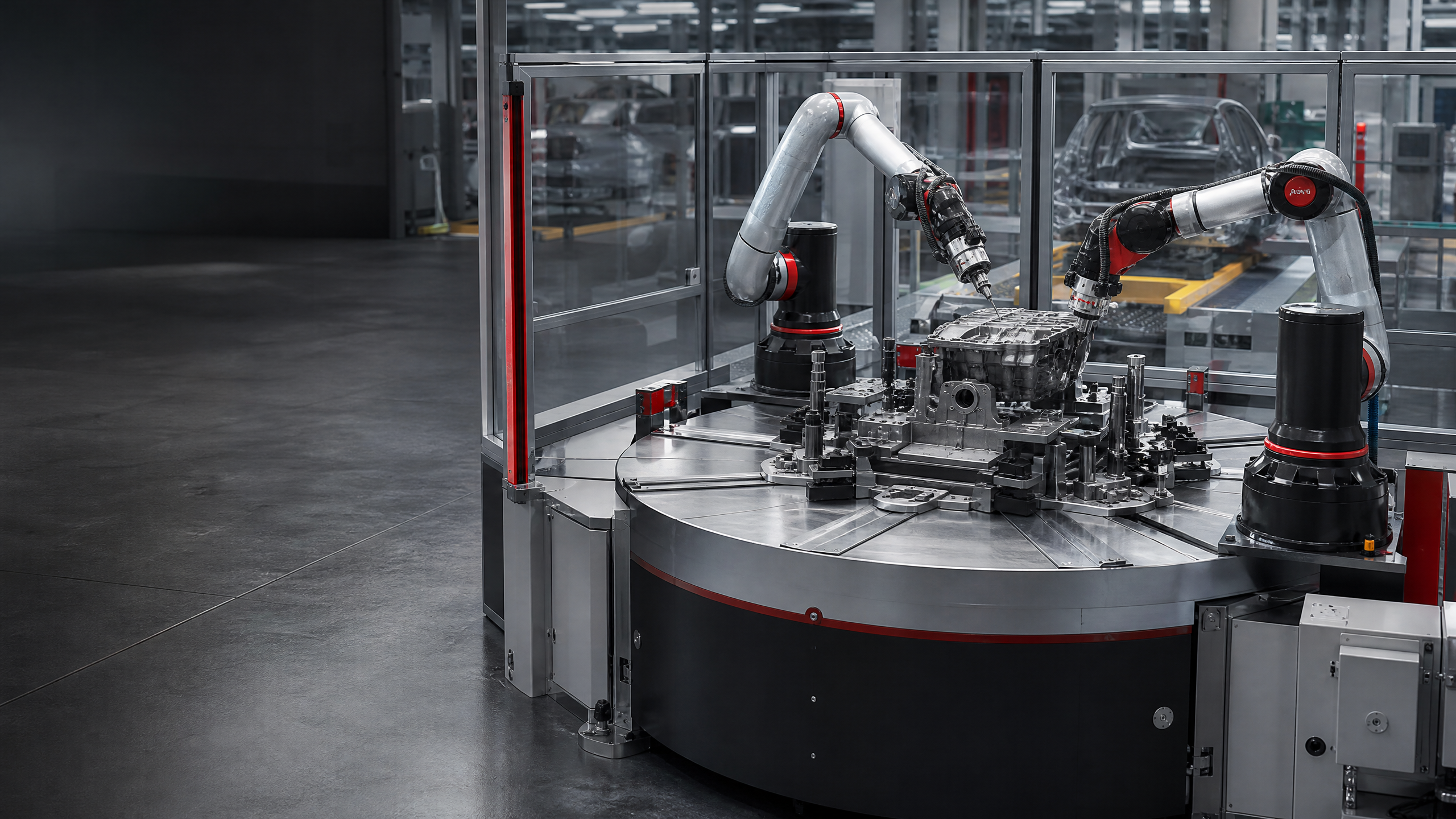
Automotive assembly cell with rotary indexing table and industrial robots01 · Mobility

Automotive, auto parts and electrification

Automotive cells combine assembly, testing, vision and transfer. Indexing establishes the reference between stations for subassemblies, conventional components and electric-mobility stages.

  • Subassembly assembly
  • Vision, inspection and test
  • Station-to-station transfer

Define fixture mass, centre of gravity, radius and available indexing time early.
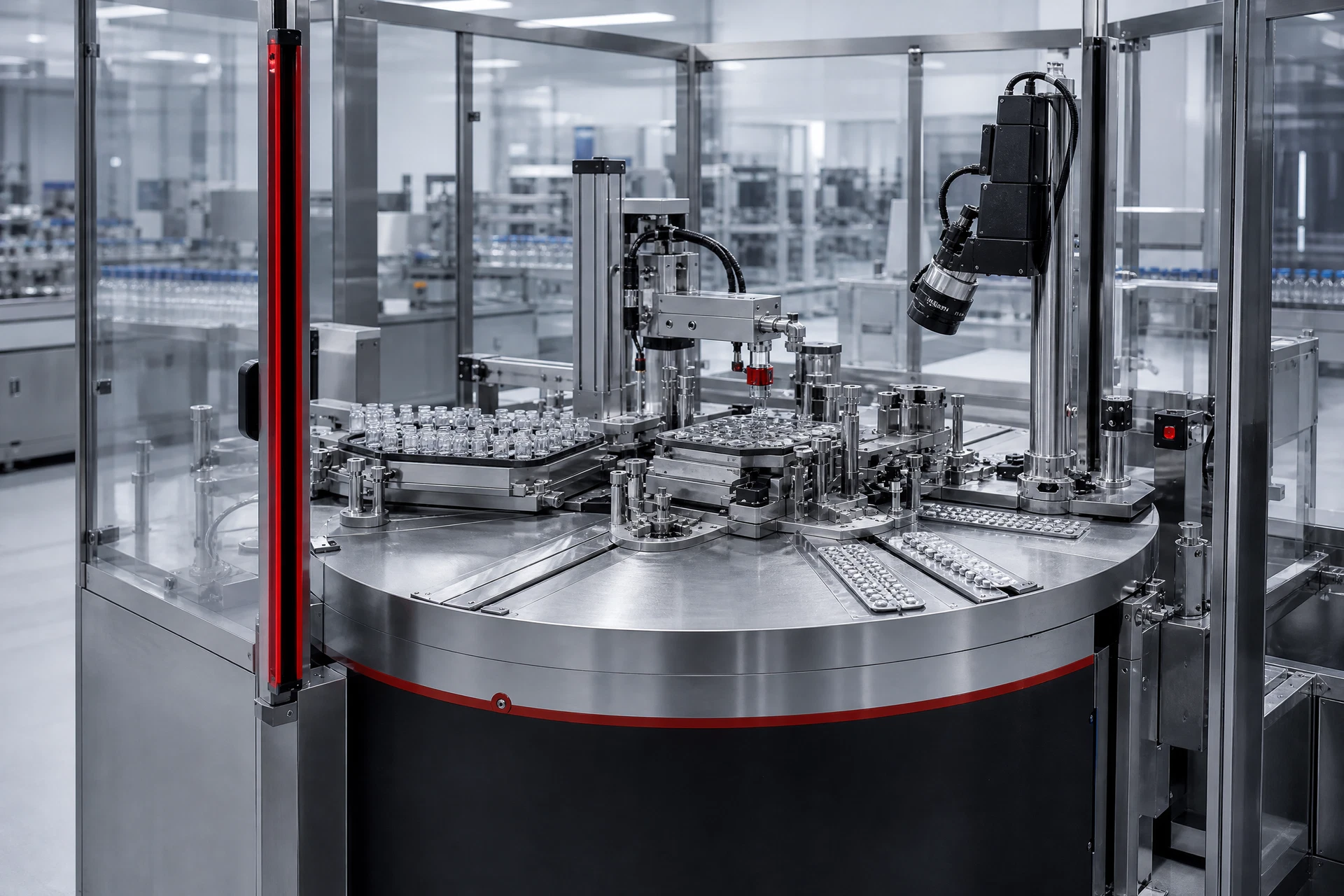
Pharmaceutical automation cell with indexing table and inspection station02 · Life science

Pharmaceutical, disposables and laboratory

At sequential stations with small components, indexing can organize assembly, handling, inspection and testing. Material, cleaning, control and validation requirements belong to the specific application project.

  • Assembly and handling
  • Visual inspection
  • Functional testing

Define sanitary, containment and validation requirements with the process team.

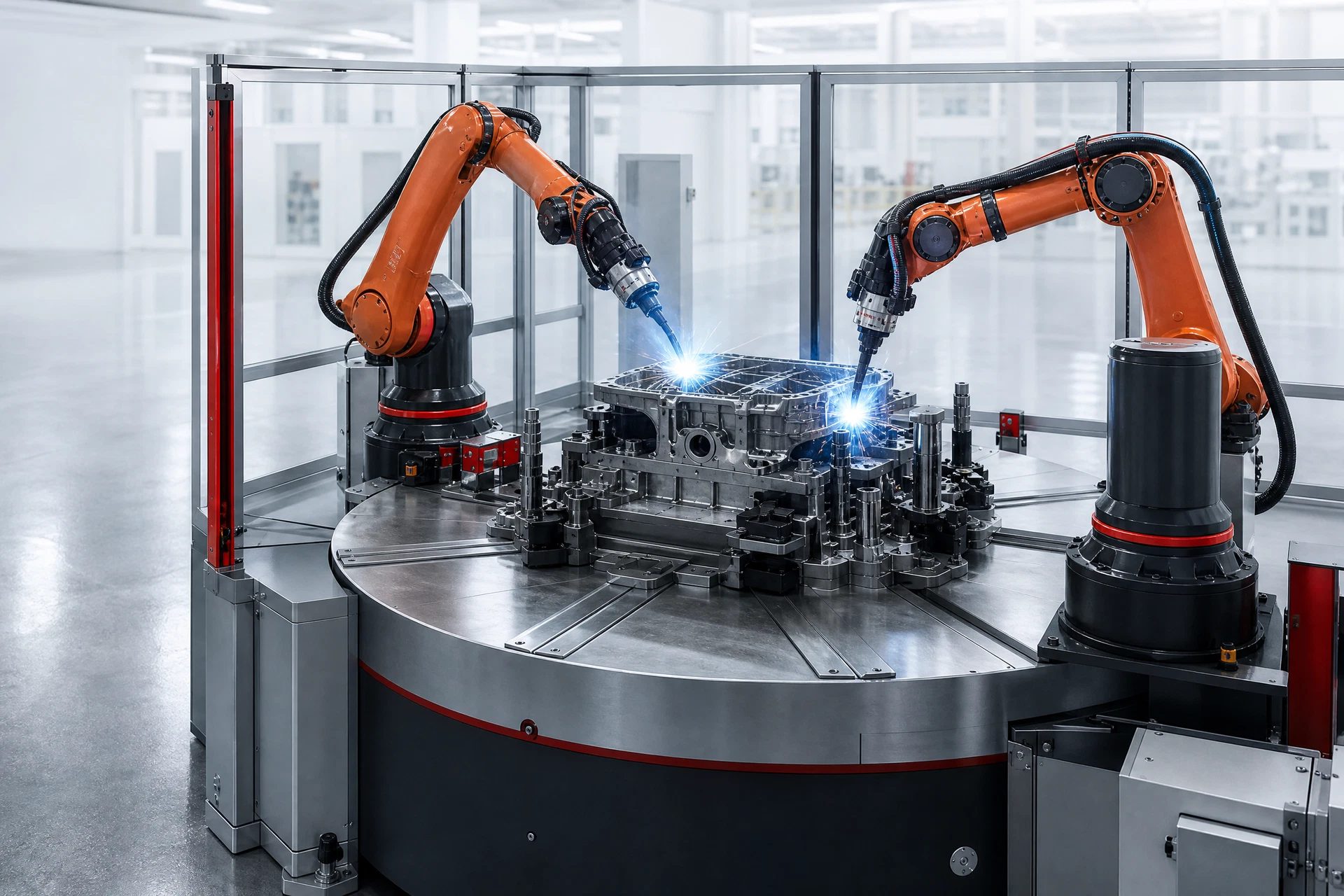
Robotic welding cell with rotary indexing table and industrial robots03 · Robotic cells

Robotic welding and component joining

The table can alternate fixtures between loading, operation and unloading while organizing robot and peripheral access. The solution must be assessed with part geometry, guarding, cabling and the manufacturing sequence.

  • Fixture loading
  • Robot operation
  • Unloading and inspection

Fixture rigidity, safety zones and peripherals directly affect the configuration.

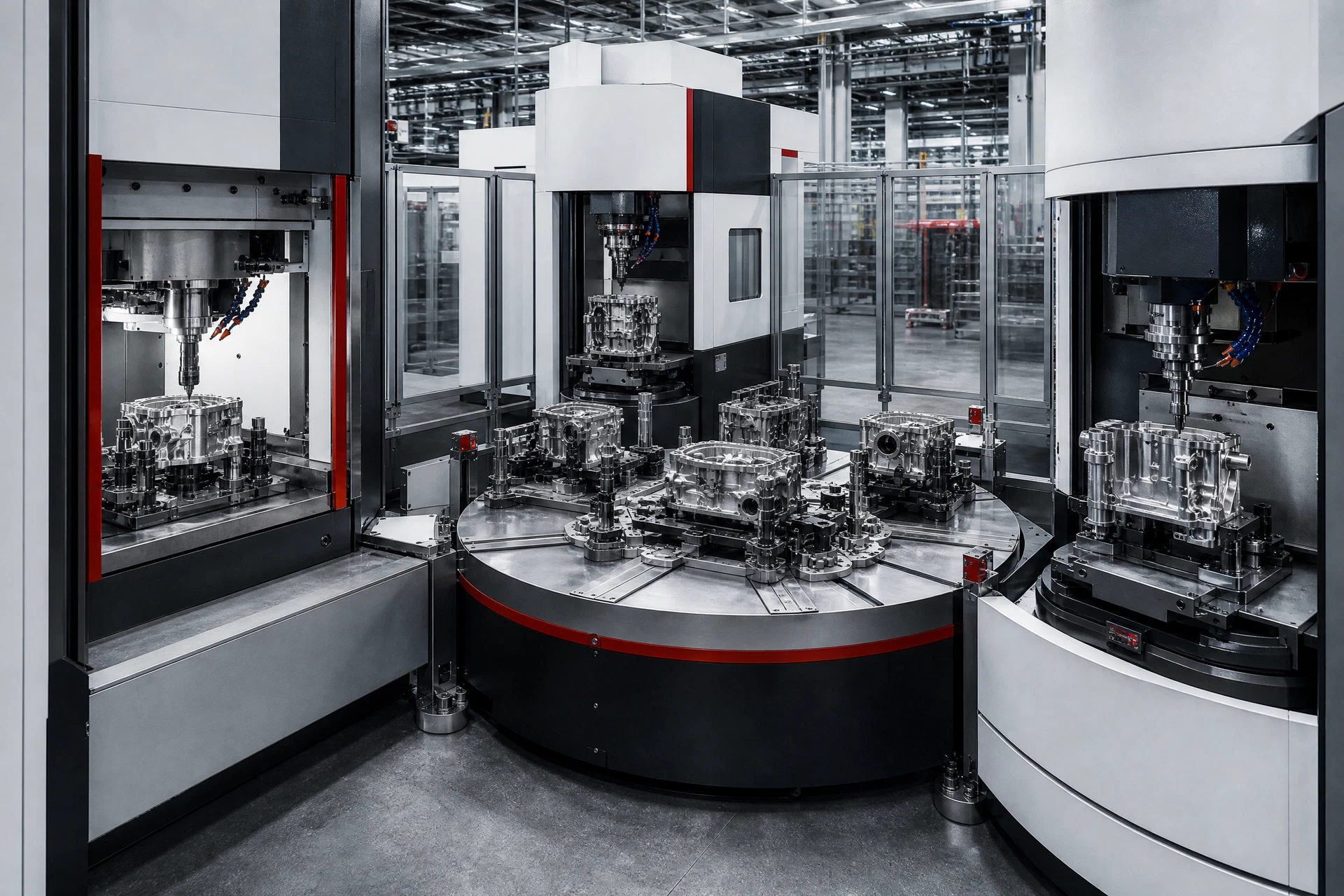
Rotary transfer machine with indexing table and machining stations04 · Special machines

Rotary transfer machines and serial machining

In rotary transfer machines, the part moves through drilling, tapping, machining and measurement. The table turns the station set into a repetitive sequence coordinated by the production cycle.

  • Machining-head access
  • Indexing between operations
  • Measurement and removal

Consider divisions, useful machining time and total inertia of disc, fixtures and parts.

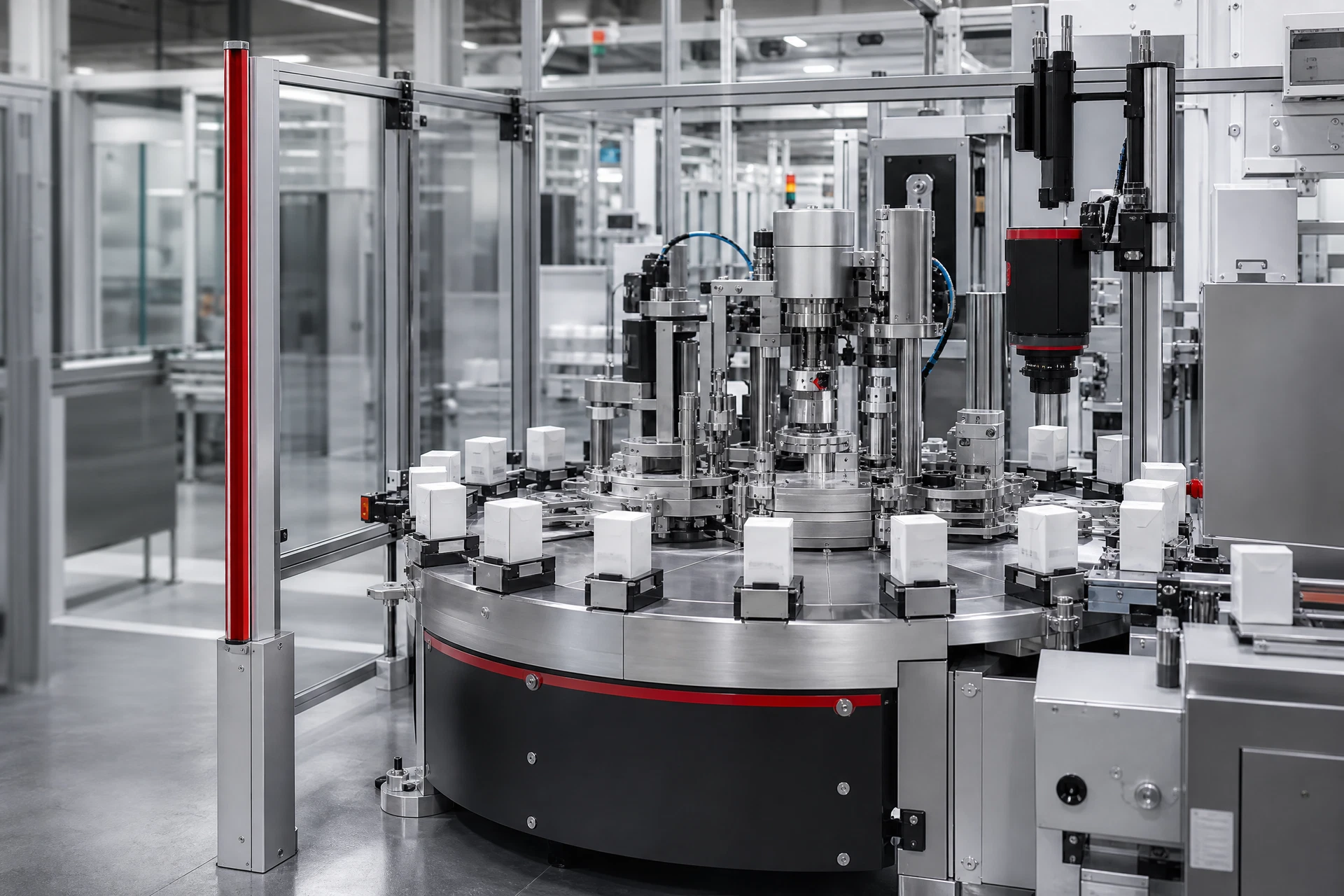
Automated packaging line with rotary indexing table and inspection stations05 · Production and handling

Packaging, filling and final inspection

Packaging lines combine feeding, dosing, closing, inspection and transfer. The table can be the movement hub between stations when every operation requires a repeatable position.

  • Feed and presence
  • Closing and inspection
  • Product transfer

Check product, package, fixture, peripherals and dwell time at every station.

Other contexts that benefit from planned indexing

Electronics and connectors

Assembly, functional testing, vision and component handling at compact stations.

Appliances and consumer goods

Tightening, application, assembly, testing and subassembly transfer.

Testing, measurement and vision

Repeatable positioning for instruments, cameras, sensors and dedicated fixtures.

Application selection

The right table starts with cell data, not just the industry.

Processes in the same segment can require different tables. Pre-selection crosses MI Series published parameters; Engineering confirms the configuration before final definition.

01

Disc/top plate, parts, fixtures, weights and radius.

02

Positions, rotation direction, indexing and dwell.

03

Inertia, power, recommended diameter and transmission.

Technical FAQ

Initial questions about rotary indexing table applications

How do I select an indexing table?

Start with the rotating assembly and the cycle: provide weight, inertia, diameter, positions, indexing time and control integration. The calculator supports pre-selection; Engineering validates the application.

Can an indexing table be used for robotic welding?

It can organize fixture transfer and positioning in robotic cells. Suitability depends on the part, fixture, guarding, peripherals, cycle and actual operating conditions.

What is the difference between fixed and CNC programmable tables?

The fixed line supports sequences with divisions defined by the process. The CNC programmable line is for control architectures requiring programmed positioning. Application data defines the choice.

Which industries use rotary indexing tables?

Automotive, electric mobility, pharmaceutical, laboratory, electronics, robotic welding, serial machining, packaging, testing and special machines are contexts where indexing can be assessed.

Technical next step

Your cell has its own rhythm. Selection should too.

Share process data, drawings, photos or a pre-sizing report. The technical-commercial team can guide the next data for a consistent assessment.

Discuss an application